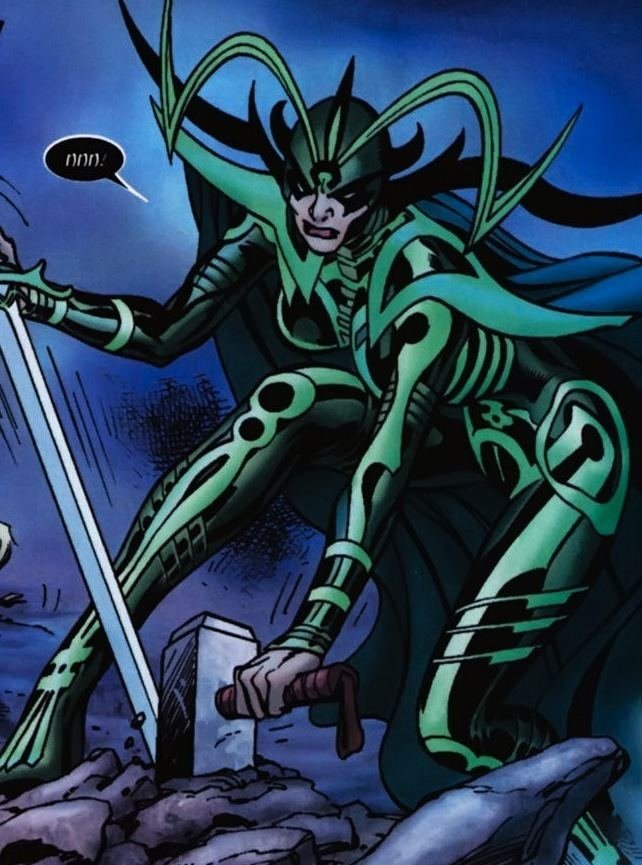
When we talk about formidable villains, few cast a shadow as long and as dark as Hela, the Goddess of Death. From her storied origins in the pages of Marvel Comics to her breathtaking, screen-shattering debut in the Marvel Cinematic Universe, The Character of Hela: From Comics to MCU Screen Adaptation offers a fascinating study in adaptation, power, and narrative evolution. She is a figure of immense strength, terrifying ambition, and undeniable style, captivating audiences while pushing heroes to their absolute limits.
This isn't just a tale of good versus evil; it's a deep dive into how core mythological concepts are reimagined for modern storytelling, making a classic villain feel both timeless and thrillingly new.
At a Glance: Hela's Evolution
- Comic Origins: Daughter of Loki, embodiment of Death, voluntary ruler of Hel, niece of Thor.
- MCU Origins: Odin's firstborn, older sister to Thor and Loki, Asgard's Executioner, original wielder of Mjolnir.
- Key Powers (Comics): Teleportation, resurrection, time travel, telekinesis, soul control, literal embodiment of death.
- Key Powers (MCU): Superhuman Asgardian attributes (enhanced by Asgard itself), materializing Necroswords/daggers/axes, geokinesis, resurrection of the dead.
- Main Goal: Rules Hel (Comics); Reclaim Asgard and conquer Nine Realms (MCU).
- Defeat (MCU): Tied to Asgard's destruction (Ragnarok) via Surtur, as her power was intrinsically linked to the realm.
- Adaptation Rationale: MCU altered her origin and powers for a more unique plot, simplified her defeat, and integrated her seamlessly into the established Odin/Asgard narrative.
Hela's Shadow: An Introduction to Asgard's Firstborn
Imagine a warrior so potent, so consumed by conquest, that even Odin, the Allfather, had to imprison her to secure peace. That's the essence of Hela, a character whose very existence challenges the core tenets of Asgardian history and heroism. She represents the darker side of Asgard's past, a brutal legacy that Odin desperately tried to erase, yet one that inevitably returns to haunt his children.
Her story, whether in ink or on screen, consistently explores themes of birthright, power, and the terrifying cost of unchecked ambition. Understanding Hela isn't just about her destructive capabilities; it's about appreciating her role as a catalyst for growth in characters like Thor and Loki, forcing them to confront uncomfortable truths about their heritage and their own potential.
The Goddess of Death: Hela's Comic Book Origins
In the sprawling tapestry of Marvel Comics, Hela is a figure steeped in Norse mythology, specifically designed to be the undisputed ruler of the dead. Her lineage alone tells a story of chaos and trickery: she is the daughter of Loki and the giantess Angerboda. This makes her Thor's niece, an interesting family dynamic that often plays out in their confrontations.
Unlike her MCU counterpart, the comic book Hela isn't just a goddess of death; she is, in many storylines, the literal embodiment of Death itself, at least for Asgardians and mortals. Her dominion over Hel is voluntary, a role she embraces with cold authority. Should Hela be "killed" in the comics, death across realms becomes impossible until her resurrection, highlighting her fundamental role in the cosmic balance. Her array of powers is vast and terrifying, including:
- Teleportation: Moving effortlessly between realms.
- Resurrection: Bringing the dead back to life, though often as her servants.
- Time Travel: Manipulating temporal flow.
- Telekinesis/Mind Manipulation: Directly influencing objects and minds.
- Soul Control: Dominance over the spirits of the deceased.
She's been depicted as an ally or even partner to formidable beings like Thanos in certain comic arcs, underscoring her universal significance and terrifying cosmic power. Her very presence evokes dread, a constant reminder of mortality for even the mightiest heroes.
From Page to Screen: Crafting Hela for the MCU
Adapting a character like Hela from the comic pages to the cinematic universe is no small feat. It requires careful consideration of narrative flow, character integration, and the overall tone of the existing franchise. The Marvel Cinematic Universe, known for its grounded (by superhero standards) approach to fantastical elements, made some significant alterations to Hela's comic book persona.
The primary goal was to create a villain who was not only visually spectacular but also deeply tied to Asgard's history and relevant to Thor's personal journey. Making her Odin's firstborn allowed for a more direct, emotional conflict within the royal family, elevating the stakes beyond a simple good-vs-evil clash. This strategic shift enabled the MCU to craft a unique and unpredictable plot, simplifying her eventual defeat without relying on Odin's continuous presence, and integrating her introduction seamlessly into the established narrative of Asgard. It gave Thor a family member who was his equal, if not his superior, forcing him into truly dire circumstances.
The MCU's Hela: Odin's Dark Secret Unleashed
In the MCU, Hela’s story is far more personal and tragic. She is introduced as Odin's firstborn daughter, an older sister to Thor and Loki. Far from being a neutral ruler of the underworld, she was Asgard’s brutal Executioner and Goddess of Death, the most powerful warrior Odin ever commanded. It was Hela who wielded Mjolnir first, aiding Odin in his bloody conquest of the Nine Realms, building the very empire he later sought to protect with peace.
However, her insatiable ambition and bloodlust proved too much even for Odin. Desiring peace after centuries of war, he imprisoned her in Hel for millennia, using his own life force to keep her bound. He then systematically erased her from Asgardian history, building a facade of peaceful rule that was, in truth, founded on her violent legacy.
Upon Odin’s death, the spell binding Hela broke, unleashing her with a vengeance. Her return was immediate and devastating. She arrived on Earth, confronting Thor and Loki, and with a casual flick of her wrist, crushed Mjolnir with her bare hands – a feat that immediately established her as a force beyond anything Thor had yet encountered. She then banished the brothers to Sakaar, leaving Asgard vulnerable to her wrath.
A Force Unstoppable: Hela's MCU Powers and Abilities
Hela in the MCU wasn't just powerful; she was a force of nature intrinsically linked to the very realm she sought to conquer. Her strength wasn't just innate Asgardian might; it was amplified by her connection to Asgard itself, making her nearly invincible on her home turf. She was, for a time, the most powerful warrior in all Nine Realms.
Her powers manifested in visually stunning and terrifying ways:
- Necroswords and Projectile Manifestation: Hela could materialize and hurl countless blades, daggers, and axes made of dark energy with incredible speed and precision. These weren't mere weapons; they were extensions of her will, appearing and disappearing at her command.
- Enhanced Asgardian Attributes: Superhuman strength, speed, durability, and a healing factor far surpassing typical Asgardians. She easily overpowered Thor and the Valkyrie.
- Geokinesis: Demonstrated control over the very ground beneath her, creating spires of rock or reinforcing structures, especially evident on the Bifrost bridge.
- Resurrection: Using the Eternal Flame beneath the throne room, she could bring the dead back to life, turning fallen Asgardian warriors into her undead army (Draugr) and even resurrecting her giant wolf, Fenris. This was a direct echo of her comic book role, adapted with a clear, tangible source of power.
- Power from Asgard: Crucially, her power was intrinsically linked to Asgard. The more she was on Asgard, the stronger she became. This vital detail became the key to her eventual defeat.
This set of abilities made her a truly terrifying and seemingly insurmountable opponent, compelling Thor to seek new depths of power and understanding.
The Reign of Terror: Hela's Impact on Asgard and Beyond
Hela's return wasn't a slow burn; it was an immediate, brutal takeover. Arriving on Asgard, she wasted no time in asserting her dominance. The first to fall were the legendary Warriors Three (Volstagg, Fandral, and Hogun), summarily dispatched, signaling the end of an era and the impotence of traditional Asgardian defenses against her. She quickly slaughtered other Einherjar warriors who dared to oppose her.
She appointed Skurge, a former Asgardian warrior, as her new Executioner, a nod to her own past role. Her immediate priority was to consolidate power and reclaim her rightful place. Beneath the throne room, she found the Eternal Flame, which she used to resurrect her formidable army of undead Asgardian warriors (Draugr) and her monstrous giant wolf, Fenris, creating a visually horrifying and unstoppable force.
Her ambition didn't stop at Asgard. Hela sought Heimdall's sword to access the Bifrost, planning to use it for wider conquest across the Nine Realms. To find Heimdall, who was hiding with the remaining Asgardian citizens, she terrorized the populace, demanding information, further solidifying her image as a merciless tyrant. Her reign was one of fear, destruction, and a chilling reminder of Asgard's violent past.
The Unmaking of a Goddess: Hela's Defeat and Ragnarok
Hela's power, fueled by Asgard itself, seemed boundless. Thor and Loki, even with the help of Valkyrie and the Hulk, were outmatched. It was during this desperate struggle that Thor had a pivotal realization: Hela's power was intrinsically linked to Asgard. As long as Asgard stood, she was virtually invincible.
The only way to defeat her was to destroy her power source – Asgard itself. This led to the iconic climax of Thor: Ragnarok, where Thor, finally embracing his true power and understanding his destiny, orchestrated the ultimate sacrifice. He had Loki place Surtur’s crown in the Eternal Flame, fulfilling the prophecy of Ragnarok.
The colossal fire demon Surtur, resurrected to his full glory, then descended upon Asgard. In a climactic confrontation, Surtur impaled and killed Hela as Asgard was destroyed around them. This allowed the remaining Asgardians to escape on a ship, led by Thor, as their home realm collapsed into stardust. Her defeat wasn't a direct victory for Thor's hammer, but a strategic sacrifice, a testament to her overwhelming power, and a profound turning point for the Asgardian people.
Why the Change? Unpacking the MCU's Adaptation Choices
The significant alterations made to Hela's character from comics to screen were deliberate and served several crucial narrative purposes within the MCU:
- Unique and Unpredictable Plot: By making Hela Odin's daughter and Mjolnir's original wielder, the MCU instantly created a deeper, more personal conflict for Thor. It wasn't just about stopping a villain; it was about confronting his family's dark past and a sibling more powerful than him. This twist kept veteran comic fans guessing and added layers of complexity to the Asgardian royal family dynamic.
- Simplified Defeat Without Odin: In the comics, Hela's defeat often involves other cosmic entities, intricate magical rituals, or even Thor seeking help from other pantheons. For the MCU, a more streamlined resolution was needed. Tying her power directly to Asgard provided a clear, impactful, and dramatic means for her defeat through Ragnarok, a prophecy already hinted at. It also allowed Thor to be the architect of her downfall, solidifying his leadership.
- Seamless Integration as Odin's Firstborn: Introducing her as Odin's firstborn fit perfectly into the established narrative of Odin's complex history. It explained the absence of a truly powerful "Goddess of Death" until then and provided a compelling reason for his past wars and subsequent desire for peace. This origin avoided the convoluted "daughter of Loki" comic book lineage, which might have complicated Loki's already tangled family tree for a casual audience.
These choices transformed Hela from a powerful but often aloof cosmic entity into a visceral, deeply personal threat to Asgard and its ruling family, making her one of the MCU's most memorable antagonists.
A Masterful Performance: The Human Element of Hela
While Hela's powers and origin story are critical, the sheer impact she had on audiences owes much to the incredible talent behind her portrayal. Cate Blanchetts Hela portrayal brought a sophisticated menace and a captivating theatricality to the role that elevated the character beyond a typical villain. Blanchett infused Hela with an aristocratic arrogance, a chilling nonchalance in her brutality, and an undeniable charisma that made her utterly compelling, even as she committed heinous acts.
Her performance conveyed centuries of suppressed rage and a sense of entitlement that resonated deeply. She wasn't just a force of destruction; she was a queen reclaiming her throne, even if that throne was built on bones. This human element, delivered with such precision, made the MCU's Hela not just a powerful antagonist, but a complex character whose motivations, though dark, were understandable within her own twisted logic.
Beyond the Veil: Common Questions About Hela
Here are some frequently asked questions and common misconceptions about Hela, clarified:
- Is Hela stronger than Thor? In the MCU, yes, while on Asgard. Her power was intrinsically linked to the realm, making her virtually invincible there. Off-Asgard, her powers might diminish, but her base Asgardian strength and skill would still be formidable. In the comics, her power level varies, but she's consistently a cosmic-level threat, often outmatching Thor.
- Could Hela return to the MCU? Given that she was impaled by Surtur as Asgard was destroyed, her return is highly unlikely in that specific form. However, in comics, characters dealing with death and the afterlife often find ways to return. The MCU rarely brings back genuinely dead villains without some magical loophole, and her specific power source (Asgard) is gone.
- Did Hela really wield Mjolnir? Yes, in the MCU, she was the original wielder of Mjolnir, forged for her during Odin's conquest. This detail significantly recontextualized Mjolnir's history and Thor's relationship with it.
- Is Hela related to Thanos in the MCU? No. In the comics, she's been a partner to Thanos in some storylines (often driven by his obsession with Death). In the MCU, there's no familial or romantic connection established between them. They operate on entirely different planes of villainy.
- What was Hela's main goal in the MCU? To reclaim her birthright – Asgard – and then resume her conquest of all Nine Realms, continuing the bloody expansion Odin had started and then abandoned.
The Legacy of Hela: What She Taught Us About Power and Family
Hela's journey from comic panel to cinematic spectacle is a masterclass in character adaptation. She serves as a brutal reminder that history is often written by the victors, and that even the most benevolent rulers might hide dark secrets. Her character forced Thor to mature beyond a hammer-wielding prince, teaching him that his power came not from a weapon, but from within, and that true leadership sometimes requires unimaginable sacrifice.
Ultimately, Hela’s story is a compelling exploration of power, ambition, and the unbreakable, if sometimes destructive, bonds of family. She forced Asgard and its heroes to face their true selves, paving the way for a new era—one forged in the fires of Ragnarok itself. Her shadow may have been long, but it was a shadow that illuminated the path for Asgard's greatest champions.