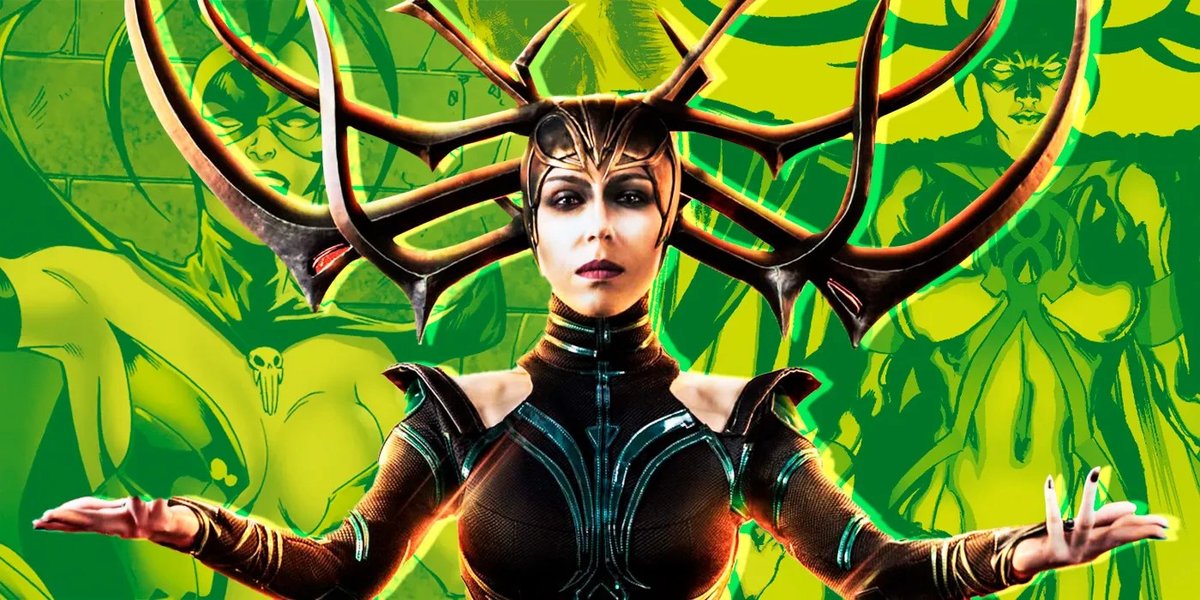
When it comes to raw, unbridled power and chilling charisma in the Marvel Cinematic Universe, few characters cast a shadow as long and as dark as Hela, the Goddess of Death. Her introduction in Thor: Ragnarok wasn't just an event; it was a cataclysm that fundamentally reshaped the MCU’s understanding of Asgard, its history, and the very nature of power. This comprehensive exploration delves deep into Hela's Powers and Mythology: An MCU Exploration, dissecting her incredible abilities, her complex lineage, and the mythological roots that informed her terrifying presence.
From her ability to manifest weapons out of thin air to her intimate connection with life and death itself, Hela wasn't just another villain—she was a force of nature, an ancient evil returned to reclaim her birthright. If you’ve ever wondered what made her so singularly formidable, you’re in the right place.
At a Glance: Understanding Hela's Reign of Terror
- Who is Hela? Odin's firstborn child and former executioner, imprisoned for millennia due to her insatiable ambition and destructive power.
- Core Power: The ability to manifest an infinite arsenal of blades and weapons from her body, seemingly out of nothing.
- Unique Asgardian Trait: Her power is directly tied to Asgard itself; the closer she is to her homeworld, the stronger she becomes.
- Necromancy: Possesses the power to raise the dead and command an army of reanimated Asgardian warriors.
- Mythology vs. MCU: While inspired by Norse myths, the MCU significantly reinterprets her backstory, making her Odin's daughter and Thor's sister, rather than Loki's daughter.
- Key Role: The catalyst for Ragnarok, forcing Thor to confront the true meaning of Asgard.
The Return of the Firstborn: Hela’s Origin and Unleashing Her Fury
Before the rainbow bridge, before the grand halls of Valhalla became a tourist destination for Earth-bound heroes, there was a darker chapter in Asgard's history. Odin, the Allfather, wasn't always the benevolent ruler we knew. He was a conqueror, and by his side stood his formidable firstborn, Hela. Together, they laid waste to realms, forging an empire through brutal force. Hela, however, reveled in the bloodshed too much, her ambitions growing beyond Odin's control. Fearing her insatiable thirst for conquest, he imprisoned her for millennia, hoping she would remain forgotten, a dark secret buried in the annals of time.
Her release, triggered by Odin's death, signaled the end of an era and the beginning of Ragnarok. With Odin’s magic seal broken, Hela burst forth, not as a prisoner, but as a queen returning to claim her throne. Her first act upon encountering Thor and Loki was to effortlessly crush Mjolnir, a moment that instantly established her as a threat unlike any they had ever faced. It wasn't just a display of strength; it was a statement: the old order was dead, and a new, terrifying one was rising.
Decoding Hela's Formidable Powers: More Than Just Brute Strength
Hela’s power set in the MCU is both vast and uniquely tailored to make her a nearly unstoppable force. Unlike Thor, whose power often feels external (Mjolnir, Stormbreaker), Hela’s strength is an intrinsic part of her being, a dark wellspring of cosmic energy and a profound connection to death itself.
Superhuman Physiology: The Might of Asgard's Firstborn
As an Asgardian, Hela naturally possesses all the enhanced physical attributes associated with her race, but on a scale that dwarfs almost every other Asgardian we’ve seen.
- Superhuman Strength: Hela’s strength is legendary. She effortlessly crushed Mjolnir with a single hand, a feat that no other being in the MCU, besides Thanos with the full Gauntlet or Vision in his initial form, has ever matched. She could tear through hordes of Asgardian guards, battle both Thor and Valkyrie simultaneously, and even matched blows with the Hulk for a brief, terrifying moment. This isn't just power; it's a casual display of immense might.
- Superhuman Durability: Her body is virtually impervious to conventional weapons and even most Asgardian weaponry. She walked through a barrage of bullets, energy blasts, and physical attacks without so much as a scratch. The only things that seemed to genuinely hurt her were powerful blasts from the newly awakened "Thunder" Thor, but even then, she recovered with astonishing speed.
- Superhuman Stamina and Agility: Hela can engage in prolonged combat without tiring, moving with a fluid, lethal grace despite her imposing armor. Her movements are quick and precise, allowing her to evade attacks and close distances rapidly.
- Enhanced Healing Factor: Injuries that would incapacitate other Asgardians heal almost instantly on Hela. This makes her incredibly difficult to defeat through conventional means, as she can recover from significant damage in moments.
Weapon Manifestation: The Arsenal Within
Perhaps Hela’s most iconic and visually striking power is her ability to manifest an infinite array of weaponry directly from her body.
- Blade Creation: From her hands, arms, and even her headpiece, she can conjure sharp, obsidian-like blades of varying sizes. These aren't just decorative; they are incredibly potent, capable of piercing Asgardian armor, flesh, and even starships. She uses them with incredible precision, often impaling multiple enemies with a single, swift motion.
- Weapon Barrage: She can unleash a torrent of these blades, raining them down on her enemies like deadly projectiles, demonstrating incredible control and range. This ability makes her a devastating force in any combat scenario, allowing her to adapt her offense on the fly.
- Dimensional Storage (Implied): While it appears she creates them from nothing, it's more likely she draws them from a pocket dimension or an intrinsic connection to the void, much like Thor's hammer recall, but on a far grander and more adaptable scale. This allows her to always be armed, never caught off guard.
Necromancy and Life-Death Manipulation: Commander of the Dead
Hela is, after all, the Goddess of Death, and her powers extend far beyond physical combat. Her connection to the realms of the deceased grants her a terrifying command over the fallen.
- Raising the Dead: On Asgard, she demonstrated the ability to reanimate an entire army of long-dead Asgardian warriors and Fenris, her monstrous wolf companion. These resurrected soldiers, with their rotting flesh and unwavering loyalty, became her personal legion, significantly bolstering her forces. This power speaks to a deeper connection with the very fabric of life and death, an ability to subvert the natural order.
- Life Drain (Implied): While not explicitly shown, her nature as the Goddess of Death, coupled with her history as Odin's executioner, hints at a power to drain life force or accelerate decay, making her truly a harbinger of the end.
The Asgardian Connection: Source of Her Unstoppable Might
One of the most crucial aspects of Hela's power is its direct link to Asgard itself. This isn't just her home; it’s her power source.
- Power Amplification: Hela explicitly states that her power grows stronger the closer she is to Asgard. Upon arriving on her homeworld, her abilities surged. Her armor, which was initially ripped and somewhat subdued, instantly regenerated and became whole, indicating a direct energy feed from the realm. This explains why she was so keen to return and why she became virtually unstoppable there.
- Geomancy (Implied): This connection suggests a form of geomancy, where she can draw energy from the land and soil of Asgard, making her almost one with the realm. This symbiotic relationship highlights why her defeat required the destruction of Asgard itself.
Hela's Mythological Echoes in the MCU: A Tale Reimagined
The MCU has always drawn inspiration from Norse mythology, but it rarely adheres to it strictly, choosing instead to craft narratives that serve its own cinematic universe. Hela is a prime example of this creative adaptation.
Norse Mythology vs. MCU Interpretation: Sister, Not Daughter
In traditional Norse mythology, Hel (or Hela) is one of Loki’s three monstrous children, alongside the Midgard Serpent Jörmungandr and the wolf Fenris. She rules over Helheim, one of the Nine Realms, a gloomy underworld where those who die of sickness or old age go. She is often depicted as half-beautiful, half-corpse, representing the duality of life and death.
The MCU takes a different, more impactful approach:
- Odin's Firstborn: In the MCU, Hela is the firstborn child of Odin, making her Thor and Loki's elder sister. This change elevates her status significantly, weaving her directly into the royal lineage and the very origin story of Asgardian conquest. It transforms her from an external threat into a deeply personal one for Thor.
- Asgardian Conqueror: Instead of a ruler of the dead in a specific underworld, MCU Hela is an active, formidable warrior who helped Odin conquer realms before her imprisonment. Her ambition is boundless, not confined to a single realm.
- Ragnarok's Catalyst: Her return directly triggers the events of Ragnarok, fulfilling the prophecy that Odin tried so desperately to prevent. This makes her central to Asgard’s ultimate destiny.
Odin's Dark Secret: The Shadow of a Conqueror
Hela's existence reveals the darker side of Odin's past. The benevolent Allfather Thor knows was once a ruthless conqueror, and Hela was his brutal enforcer, his "executioner." Her methods were too extreme, even for Odin, leading to her imprisonment. This historical revision not only gives Hela a more compelling and tragic backstory but also adds depth to Odin, showing that even the wisest of kings has buried secrets and past sins that eventually come back to haunt them. It contextualizes Thor’s journey, forcing him to understand that Asgard's glory was built on a foundation of conquest and bloodshed.
Why Hela Was Such a Threat (and a Fan Favorite)
Hela wasn't just powerful; she was terrifyingly effective, and audiences immediately connected with her chilling presence. Her impact resonated far beyond her physical capabilities.
- Unwavering Will and Ruthlessness: From the moment she steps onto the scene, Hela demonstrates an absolute conviction in her right to rule and an utterly ruthless approach to achieving her goals. She doesn't hesitate, she doesn't negotiate, she simply takes.
- Tactical Acumen and Experience: Having fought alongside Odin for centuries, Hela possesses vast combat experience and a keen tactical mind. She systematically dismantled Asgard's defenses, crushed its army, and knew exactly how to break the spirit of its people.
- Emotional Stakes: By making her Thor's sister, the MCU elevated the personal stakes. Thor wasn't just fighting a villain; he was fighting his own family, a dark reflection of Asgard's past. This added a layer of tragedy and internal conflict to the final confrontation.
- Cate Blanchett's Hela portrayal was nothing short of iconic. Blanchett brought an aristocratic menace, a predatory grace, and a captivating blend of power and poise to the role. Her performance elevated Hela from a mere antagonist to one of the MCU's most memorable and beloved villains, making her genuinely intimidating yet utterly captivating to watch. Her expressions, her posture, her every line delivery radiated a regal, ancient evil that was both mesmerizing and horrifying.
- The Unbeatable Foe: For the first time, Thor faced an enemy he truly could not defeat alone. Her raw power forced him to embrace his own inner strength, understand the true nature of Asgard, and make the ultimate sacrifice to protect his people.
Hela's Enduring Legacy: Impact on Thor and Asgard
Even though Hela was ultimately defeated—consumed by Surtur's flames along with Asgard itself—her impact on the MCU, and especially on Thor, is profound and lasting.
- Forced Growth for Thor: Hela's return stripped Thor of his comforts—Mjolnir, his father, his home, and his belief in a glorious past. It forced him to confront the grim realities of his family's history and awakened his true power, revealing that "Asgard is not a place, it's a people." This realization was crucial for his development into the hero he became in subsequent films.
- Redefined Asgard: Hela destroyed the physical manifestation of Asgard, but in doing so, she paved the way for the Asgardian people to find a new home and identity. Her actions, ironically, led to the birth of New Asgard on Earth, a testament to resilience and adaptation.
- Symbol of Undone Sins: Hela remains a potent symbol of the consequences of hidden pasts and unchecked ambition. She represents the chickens coming home to roost, the truth of a conqueror's legacy that can never truly be buried.
Addressing Common Questions About Hela
You've got questions about the Goddess of Death, and we've got answers.
Is Hela stronger than Thor?
Absolutely, at least in Thor: Ragnarok. Hela's power on Asgard far surpassed Thor's, even after he awakened his "thunder" abilities. She effortlessly dispatched the entire Asgardian army, destroyed the Bifrost Bridge, and held her own against both Thor and Valkyrie simultaneously. Thor only managed to defeat her by unleashing Surtur to destroy Asgard, which was the source of her immense power.
How did Hela get her powers?
Hela's powers are innate. As Odin's firstborn and an Asgardian, she possesses superhuman attributes. However, her unique abilities to manifest weapons and control death seem to stem from her inherent connection to the dark aspects of life and the cosmos, amplified significantly by her direct link to Asgard itself. She wasn't gifted her powers; she was born with them, and they were honed through centuries of conquest.
Is Hela truly dead?
Yes, Hela is definitively dead in the MCU. She was caught in the fiery explosion that accompanied Surtur's destruction of Asgard. While characters in the MCU have a tendency to return, Hela’s demise seemed permanent, given the circumstances. Her death was necessary for Thor to move forward and for the Asgardian people to truly find peace.
What are the biggest differences between MCU Hela and Norse Mythology Hela?
The primary differences are her parentage and her role. In the MCU, she is Odin's daughter and Thor/Loki's sister, making her a direct part of the royal family. In Norse mythology, she is Loki's daughter. The MCU version is a formidable warrior and conqueror, actively participating in wars, whereas the mythological Hel primarily rules over the realm of the dead, a more passive but still powerful figure. The MCU's Hela is also directly tied to the physical land of Asgard for her power boost, a concept not present in traditional myths.
The Unforgettable Legacy of Asgard's Darkest Chapter
Hela's brief but impactful reign in the MCU was a masterclass in villainy. Her powers, while devastating, were only part of what made her so compelling. It was her history, her connection to Odin's past, and her unwavering conviction that solidified her place as one of the most formidable adversaries Thor has ever faced. She forced Asgard to confront its true nature, pushing its champion to his limits and ultimately ushering in a new era for its people. The Goddess of Death may be gone, but the reverberations of her return continue to shape the destiny of Asgard and its king.